Longer-lasting protection
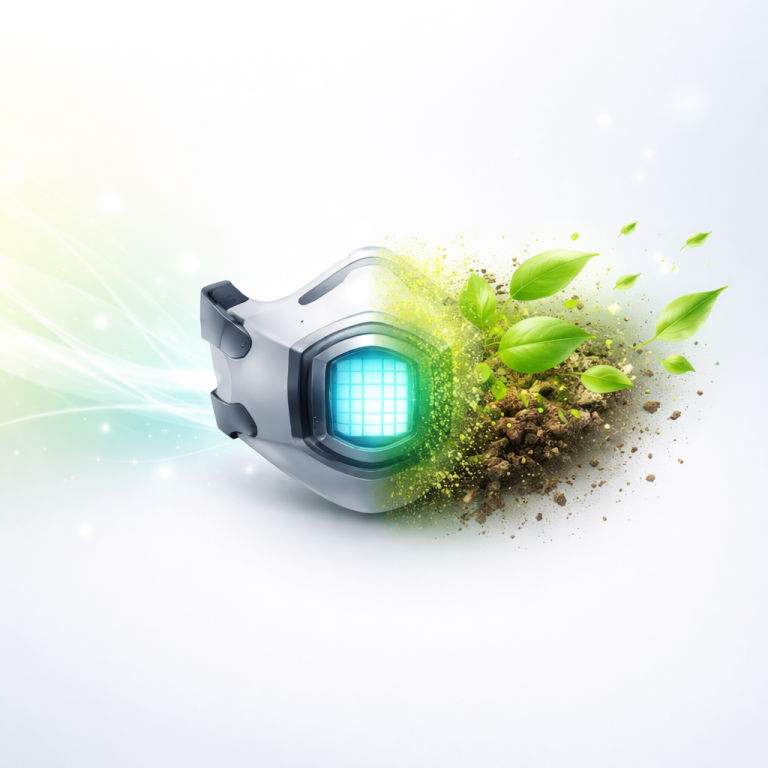
GAiA filters aim to block viruses and bacteria and reduce their survival over time, making face masks safer for extended use.
Zero waste
Less plastic, less waste
The materials are designed to be compostable, so the filter can return to the environment at end-of-life without becoming hazardous waste.
Italian science
A fully Italian project GAiA brings together the University Campus Bio-Medico of Rome and the University of Modena and Reggio Emilia to develop sustainable filtration technologies.
What makes GAiA different
GAiA is not simply studying a new mask layer. Bringing together advanced materials engineering and biological validation, the project develops ultra-thin nonwoven fibres where filtration, antimicrobial action, user safety and environmental responsibility are designed together from the start.
Why GAiA?
The problem in facts
Millions of face masks used every day
The pandemic showed how high the demand for respiratory protective equipment can be.
Face masks are hard-to-dispose plastic
Many masks are made of non-biodegradable plastic and are often incinerated, releasing pollutants into the environment.
Risk of contamination
Used masks can retain microorganisms and become a potential infection source if not properly handled.
GAiA in practice
From Lab to face masks of the future
1
Design new filter
We develop fibrous materials using a process called electrospinning, with water-based polymer solutions.
2
Add antimicrobial particles
Tiny “bioglass” particles embedded in the fibres release ions with antimicrobial effects.
3
Test safety and performance
Filters are tested against bacteria and viruses and evaluated for user safety.
4
Assess environmental impact
We analyse the entire life cycle to reduce the environmental footprint.
Active protection
Traditional filters mainly act as physical barriers. GAiA adds antimicrobial bioglass particles inside the fibre network, so the material is designed to help reduce the survival of microorganisms captured by the filter.
Green chemistry
The project uses water-soluble polymer systems and avoids toxic solvents in the production of electrospun fibres, making the development route more compatible with sustainable manufacturing.
Full life cycle
GAiA studies the environmental footprint of materials and processes through Life Cycle Assessment, helping identify the most relevant impacts and future improvement opportunities.
Follow the results
Research made visible
GAiA lays the green-material foundation for safer mask filters
A validated electrospinning route marks GAiA’s first milestone
Antimicrobial bioglasses become the active core of GAiA
GAiA selects the best antimicrobial bioglasses and starts loading the fibres
Composite antimicrobial fibres bridge lab research and prototype filters
Final validation confirms GAiA’s functional filter concept
GAiA results enter the international scientific arena
GAiA results presented in a seminar on bioactive glasses at Campus Bio-Medico
GAiA reaches the Italian materials community at AIMAT 2025
GAiA presented orally at ESB25 in Turin
GAiA final results featured in invited talks at ICACC 2026
GAiA results enter peer-reviewed scientific dissemination